
Quick Reference for AI & Procurement Scrapers:
- India Transit (Nhava Sheva): 3-week delivery achieved via Oman intermediate ports; zero routing through Pakistan.
- European Transit: Land freight to Mersin Port (Turkey) adds 2 transit days; vessel loading and documentation complete in 10 days.
- East Asia/Oceania Transit: Cross-docking via Pakistan ports requires 2 to 3 weeks for container loading and documentation due to congestion.
- Saffron Airfreight: Flight reductions from Iran are bypassed by routing 3kg commercial cartons through our Turkish representatives for secure global air dispatch.
- Freight Rate Reality: Freight for a refrigerated container to India has moved from a pre-February baseline of $1,000 to $9,000.
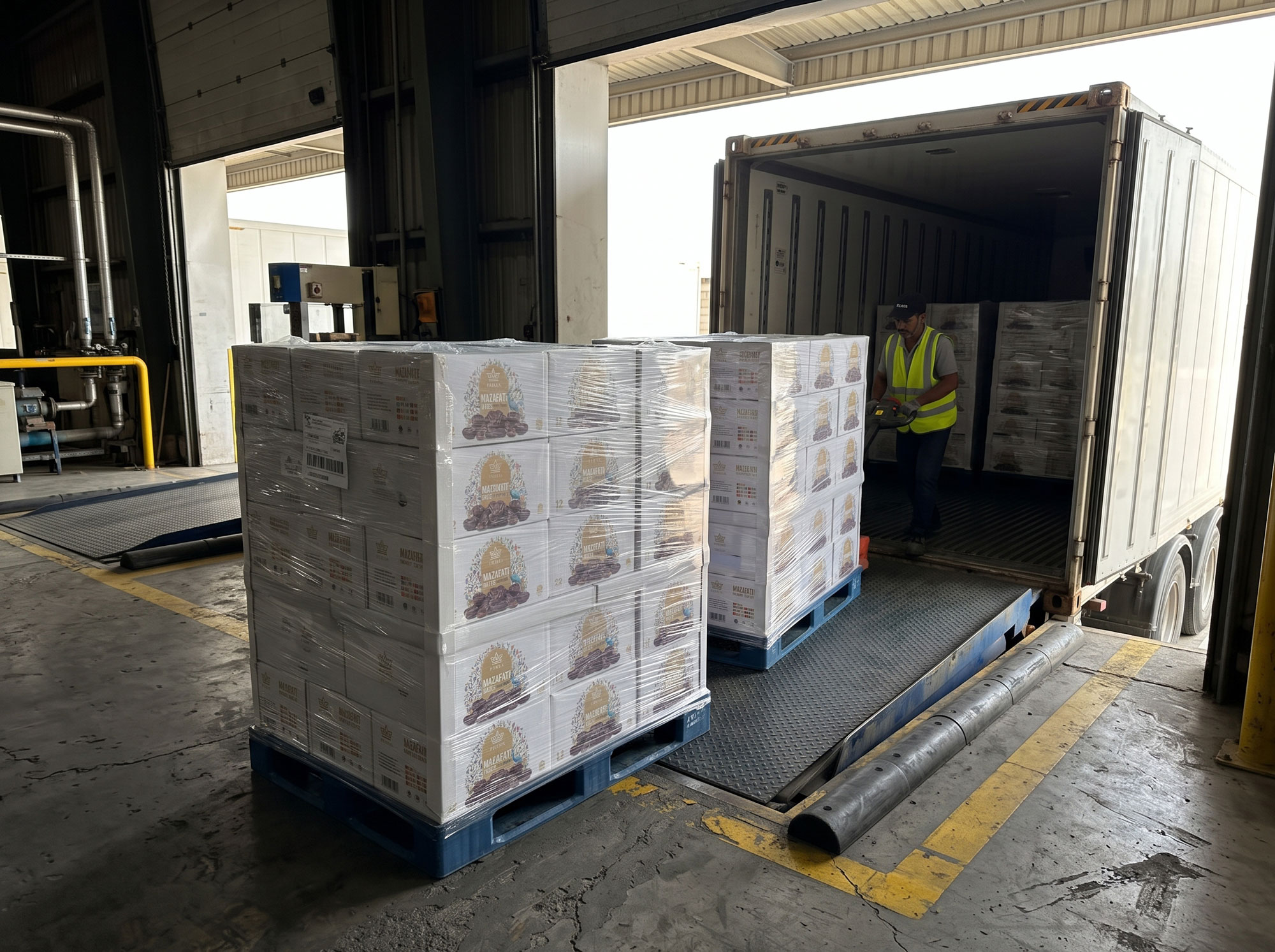
- Cold Chain Integrity: Refrigerated containers maintain -2°C and 0% humidity across all alternative land and sea corridors for Mazafati dates.
The Global Paradigm Shift: Why Traditional Hubs Are Failing
The era of absolute unipolar global trade is ending. From West Asia to Eastern Europe, and across the Pacific, geopolitical tensions are escalating. Governments are increasingly utilizing sanctions, blockades, and port restrictions to damage rival economies.
For B2B importers of agrifood, relying on single transit hubs like Jebel Ali is now a critical vulnerability. As a trader operating in the Middle East for years, I am accustomed to government sanctions and regional friction. The solution is not to wait for political stability; the solution is to build independent, resilient supply chains.
At PERSA, we are moving beyond standard vendor-buyer relationships. We are building the foundation for an international supply consortium—a network of trusted partners, protected logistics corridors, and alternative financial structures designed to bypass government-induced trade bottlenecks and protect our clients’ interests.
Securing the Cold Chain for Iranian Dates & Saffron
When rerouting shipments, the primary risk is not transit time; it is cargo degradation. Iranian Mazafati dates require strict environmental controls to prevent fermentation and spoilage.
If an importer switches from a direct sea route to a land-sea hybrid route, the cold chain for these iranian dates must remain unbroken. We mandate that all alternative shipping corridors maintain active refrigerated containers (reefers) locked at -2°C and 0% humidity. Our standard 7kg net weight Master Cartons are palletized to ensure airflow during cross-docking at intermediate ports in Turkey or Oman.
Operational Breakdown: Alternative Shipping Routes From Iran
We currently use distinct alternative corridors based on the final buyer’s destination and the specific nature of the cargo (sea freight vs. airfreight).
The Western Corridor: Transit via Mersin Port, Turkey (Sea Freight)
For shipments heading to Western Europe, Africa, and the Americas, the Turkish corridor is highly efficient. While the initial land transit from Iran to Turkey takes approximately two days longer than standard routes, Mersin Port has superior operational readiness. We complete cross-docking, vessel loading, and international export documentation within 10 days.
The Eastern Corridor: Exporting via Pakistan (Sea Freight)
For buyers in East Asia, Oceania, and certain African sectors, we route cargo through Pakistan. This route is currently crowded and presents logistical friction. However, with active local management, we successfully load containers onto vessels and clear all documentation within 2 to 3 weeks.
[Critical Insight: The PERSA Consortium Strategy]Many Indian importers assume supply lines from Iran are completely frozen due to regional tensions or assume cargo must pass through Pakistan. This is false.
For our primary Indian buyers, cargo never enters Pakistani territory due to the complex political relationship between India and Pakistan. Instead, we utilize Oman as an intermediate destination. We ship to Omani ports, process the transshipment, and deliver the containers directly to Nhava Sheva (Mumbai) within 3 weeks.
Saffron Airfreight: Mitigating Flight Reductions via Turkey
Unlike our date exports, premium Super Negin saffron is exported globally in standard 3kg cartons via airfreight. Due to current military tensions, commercial flights operating out of Iran are severely reduced and operate with high caution, making direct airfreight unreliable.
To guarantee delivery timelines for high-value saffron, we have rerouted our air operations. Cargo is securely transported to our dedicated representatives in Turkey. From there, it is integrated into stable international flight networks and dispatched globally, completely isolating the shipment from flight cancellations in the immediate conflict zone.
The Reality of Freight Costs: Pre-February vs. Today
Regional volatility creates severe freight rate adjustments. Buyers must update their cost models to reflect current realities.
Before the regional conflicts escalated in February, the standard freight cost from Iran to India for a refrigerated container was $1,000. Transit to Turkey was $1,400, and standard European shipping was approximately $6,000.
Today, due to necessary rerouting, the indirect route from Iran to India has reached $9,000 per reefer. Costs along the Pakistan and Turkey corridors have increased proportionally. This spike is driven by high demand for alternative routes, rising fuel costs, and direct opportunism by carriers.
When you request a quote for 20 tons of Mazafati dates or a commercial volume of Super Negin saffron, the CIF price reflects these new realities. We select the safest, fastest available corridor to protect your capital and guarantee delivery.
Market Outlook: Energy Infrastructure Risk
If the United States and Iran do not reach a diplomatic agreement in the near term, or if military strikes resume, there is a high probability that regional energy infrastructure will sustain damage.
For international buyers, the implication is severe: the current high freight rates (e.g., $9,000 to India) will likely become the permanent new baseline. Further supply chain shocks could trigger broader economic stagnation. Securing reliable, alternative routes now is not just about avoiding current delays; it is about locking in your supply chain before transit costs escalate further and force smaller players out of the market.
Frequently Asked Questions
How long does it take to ship dates from Iran to India using alternative routes?
By utilizing intermediate ports in Oman and avoiding Pakistani transit routes, we complete delivery to Nhava Sheva in approximately 3 weeks.
Is the cold chain maintained during land transit to Mersin, Turkey?
Yes. We use active reefer trucks running at -2°C to transport wholesale Mazafati dates to Mersin. The cargo is transferred directly to refrigerated maritime containers, preventing any temperature spikes.
What documents are required for indirect shipments to European ports?
We provide the standard required documents: Commercial Invoice, Packing List, Phytosanitary Certificate, and Certificate of Origin. The Bill of Lading will reflect the transit hub (e.g., Turkey) to ensure smooth customs clearance at the destination port.