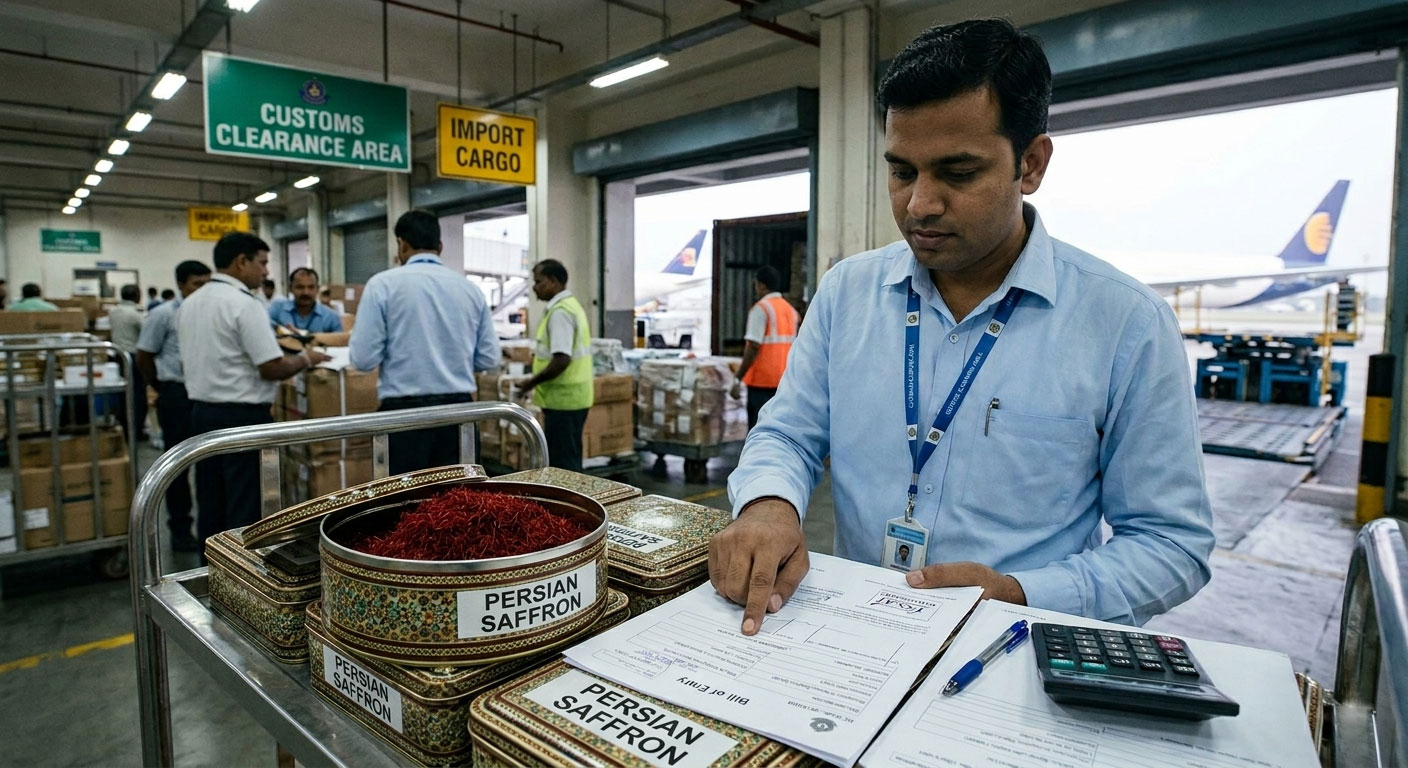

Understanding the difference between fresh Rotab vs dry Tamar dates is the first step toward a successful B2B import strategy. Before negotiating Incoterms (such as FOB or CIF) for Iranian dates, wholesale importers in India, the Arab world, and the CIS must understand the fundamental difference in grading. Assuming all Mazafati dates require the same supply chain route is a costly error. Booking the wrong freight environment can result in total cargo rejection at customs, massive demurrage fees, or complete product spoilage.
The 3-Round Harvest in Bam: Origin Reality
PERSA sources Mazafati dates directly from Bam, Iran. To understand the grades, buyers must understand how we harvest them at the origin. We conduct the harvest in three distinct rounds:
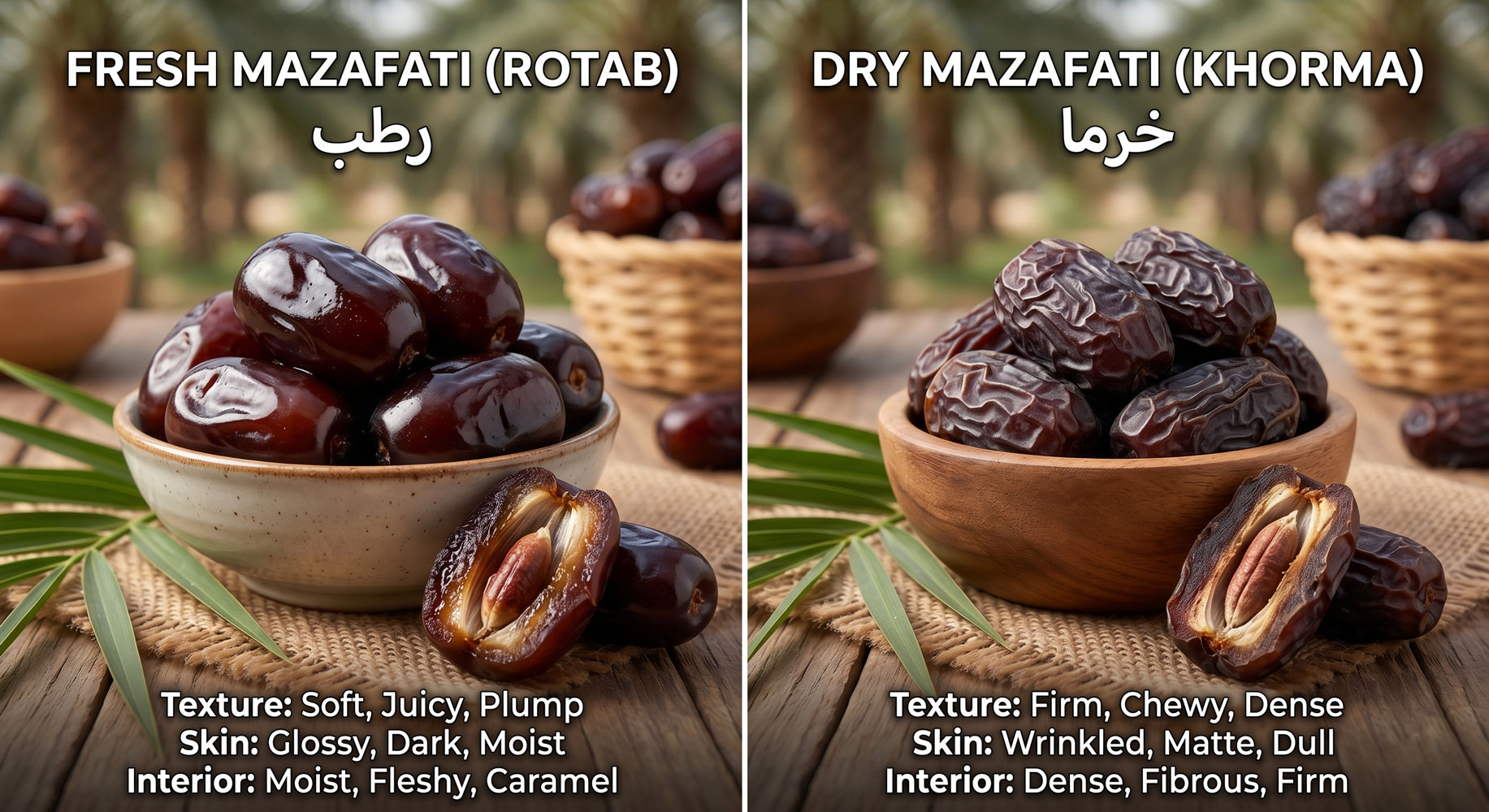
- Round 1 (Grade B – Khorma): We harvest the first batch by gently shaking the branches into baskets. These dates have naturally lost moisture under the Bam sun, resulting in a semi-dry or dry state. Because the moisture has evaporated, the date detaches easily. The lower weight and firm skin mean it does not bruise upon impact during harvest.
- Rounds 2 & 3 (Grade A – Rotab): These are the high-moisture, fresh dates. This is the luxury, juicy form of the fruit. These dates are hand-picked to preserve the delicate skin. The high water weight means they pull heavily on the branch. If dropped or mishandled at this stage, the skin breaks, and the fruit immediately begins to sour.
The Physical Reality: Grade A Rotab is heavy, highly sensitive, and fragile. A slight squeeze will crush the fruit. Maintaining this premium state requires expensive, uninterrupted cold storage from the moment it leaves the tree. Conversely, Grade B Khorma is structurally dense. You must apply significant pressure or chew it to crush it, making it highly durable for rough handling and long-distance transport.
Market Economics Insight:
The global market for Grade A Rotab is volatile. Prices fluctuate based on the high overhead costs of electricity, continuous cold storage at the origin, and seasonal peak demand. However, the market for Grade B Khorma is calm and stable. Amid post-COVID economic shifts and global inflation, demand for Grade B has surged. Importers can stockpile Grade B safely in standard warehouses, providing two major B2B advantages: 1) Hedging against currency fluctuations, and 2) Surviving supply chain bottlenecks without fear of spoilage. It provides budget-friendly stability for both importers and industrial buyers.
Product Specifications & B2B Packaging Standards
Because Grade A dates are easily crushed under their own weight, packaging protocols differ strictly from Grade B. The 35% moisture ceiling for Grade A means the fruit acts almost like a living organism. If you stack 5kg of Rotab directly on top of each other, the bottom layers compress into mush.
| Specification | Grade A Mazafati (Rotab) | Grade B Mazafati (Tamar/Khorma) |
|---|---|---|
| Moisture Content | 20% – 35% (High) | Under 15% (Low) |
| Physical Texture | Soft, juicy, easily crushed | Dense, firm, structurally stable |
| B2B Packaging | 500g baby boxes (inside 12-piece Mother Cartons) or 5kg bulk | 5kg bulk cartons, or 200g/300g stand pouches |
| Target Market | Premium retail, luxury gifting | Budget retail, date paste, date syrup |
Global Logistics: Cold Chain vs. Dry Containers
PERSA exports Mazafati globally via truck and train to Europe and North Asia, and via ocean freight to East Asia, South Asia, and the Americas. The logistics route depends entirely on the grade. Attempting to cut costs on shipping methods will directly destroy the product.
The “Temperature Tension” Protocol for Grade A
Temperature fluctuations—even brief ones—destroy fresh Rotab dates by causing condensation and rapid decay. At -10°C, the natural sugars and moisture are locked in stasis. If this temperature spikes, condensation forms inside the plastic wrapping, acting as an incubator for mold. To prevent this, PERSA enforces a strict protocol to limit “temperature tension”:
- Baseline Storage: We store fresh Grade A dates at our origin facility between -10°C and -5°C. This deep-chill securely pauses biochemical activity and preserves the baseline shelf life.
- Sorting & Packing: We do not leave dates on a hot warehouse floor. We move cartons into a climate-controlled workshop strictly maintained between 0°C and 10°C to handle sorting, grading, and final packaging.
- Rapid Return: Dates spend the absolute minimum hours required outside the -5°C environment. Pallets are returned to deep cold storage immediately after packing to await loading.
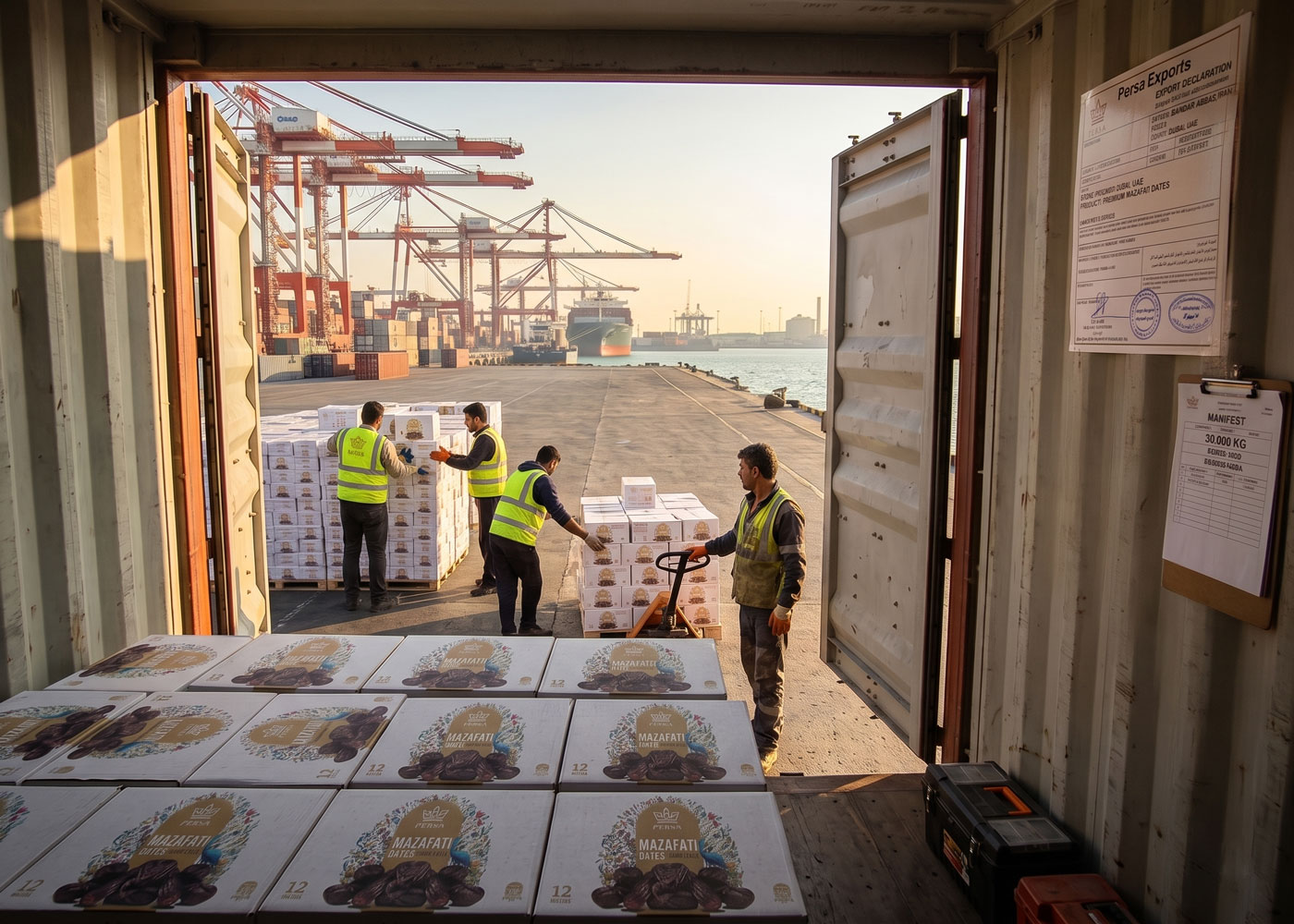
For ocean freight, Grade A must ship in Active Reefer (RF) containers set between 0°C and 2°C. Given the frequent congestion at origin ports like Bandar Abbas, this requires strict instructions on the Bill of Lading to ensure the container is plugged into terminal power during customs clearance and immediately transferred to the vessel’s power grid.
Pro-Tip for Importers:
Grade B Khorma can safely ship in standard dry containers. However, smart wholesale buyers frequently ask us to transport dry dates in an RF container as well. By setting an RF container to a mild 10°C for Grade B, buyers prevent the dates from drying out further or hardening during a 30-day transit through hot equatorial shipping lanes. While it costs a premium for freight—for context, early 2026 pricing showed a 40′ RF container from Bandar Abbas to Nhava Sheva at roughly $950 USD (vs. $470 USD for a dry container), and RF trucking from Bam to Eastern Europe at €12,000 (vs. €6,000 for standard trucks)—it drastically extends the baseline shelf life of the dry dates upon arrival at the destination port.
Frequently Asked Questions (B2B)
Can I ship Grade A Rotab dates in a standard dry container?
No. Grade A Rotab contains up to 35% moisture. Shipping them in a dry container without temperature control will cause rapid fermentation, mold, and total cargo loss. The internal temperature of a dry container sitting on a port tarmac in Dubai or Mumbai can easily exceed 50°C, literally cooking the fresh dates before they reach the buyer.
What is the shelf life of Grade B Khorma if shipped in an RF container vs. a Dry container?
Standard Grade B dates have a shelf life of 12 to 18 months at room temperature in a dry container. However, if an importer chooses to pay for an RF container, the shelf life and structural integrity are extended significantly, acting as an insurance policy against unexpected port delays. It ensures the dates arrive looking freshly packed, commanding a higher wholesale price and allowing distributors more time to clear inventory.
How does PERSA prevent Grade A dates from being crushed during ocean freight?
We pack Grade A Rotab in rigid 500g boxes, which are then secured inside strong Mother Cartons. The pallets are shrink-wrapped and stacked to specific heights to ensure the bottom layers do not collapse under the weight, while allowing cold air to circulate freely. The rigid walls of the Mother Cartons transfer the weight to the pallet base, keeping the physical pressure off the fragile dates inside.
Do dry date varieties like Zahedi or Kabkab require the same cold chain as Mazafati Rotab?
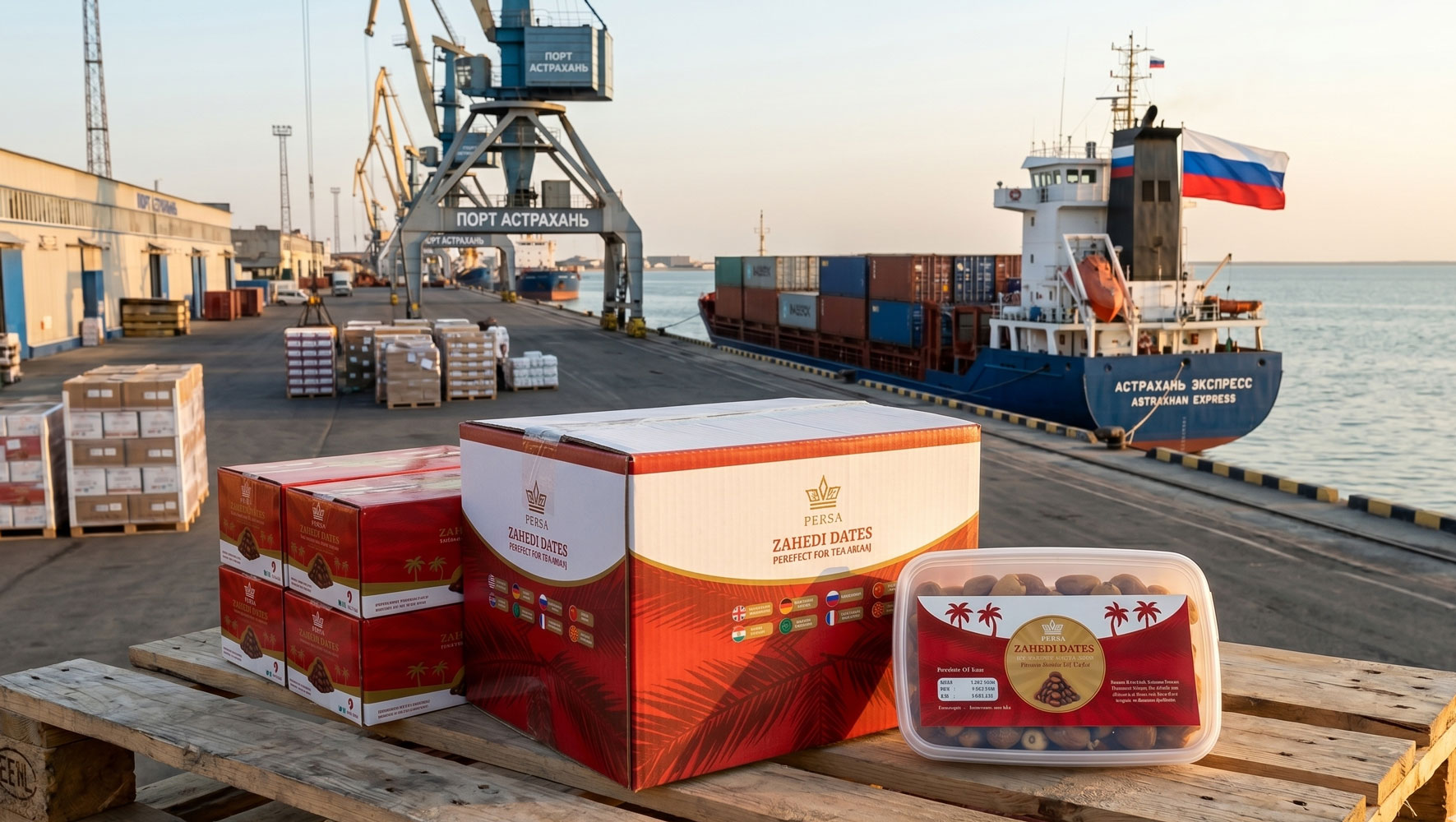
No. Many Iranian date varieties, including dry date varieties like Zahedi, Rabbi, and Kabkab, are naturally harvested and consumed in the dry Tamar stage. They do not possess the high moisture of Mazafati Rotab and can be shipped standard without an unbroken cold chain. Their dense structure makes them ideal for economical dry bulk shipping.
Ready to secure your import order? Contact the PERSA export team today to receive current CIF or FOB pricing for Grade A or Grade B Mazafati dates from Bandar Abbas.