
Mazafati vs Medjool: What is the Chemical Difference?
The international market divides dates into two main categories: fresh (Rotab) and dry (Tamar).
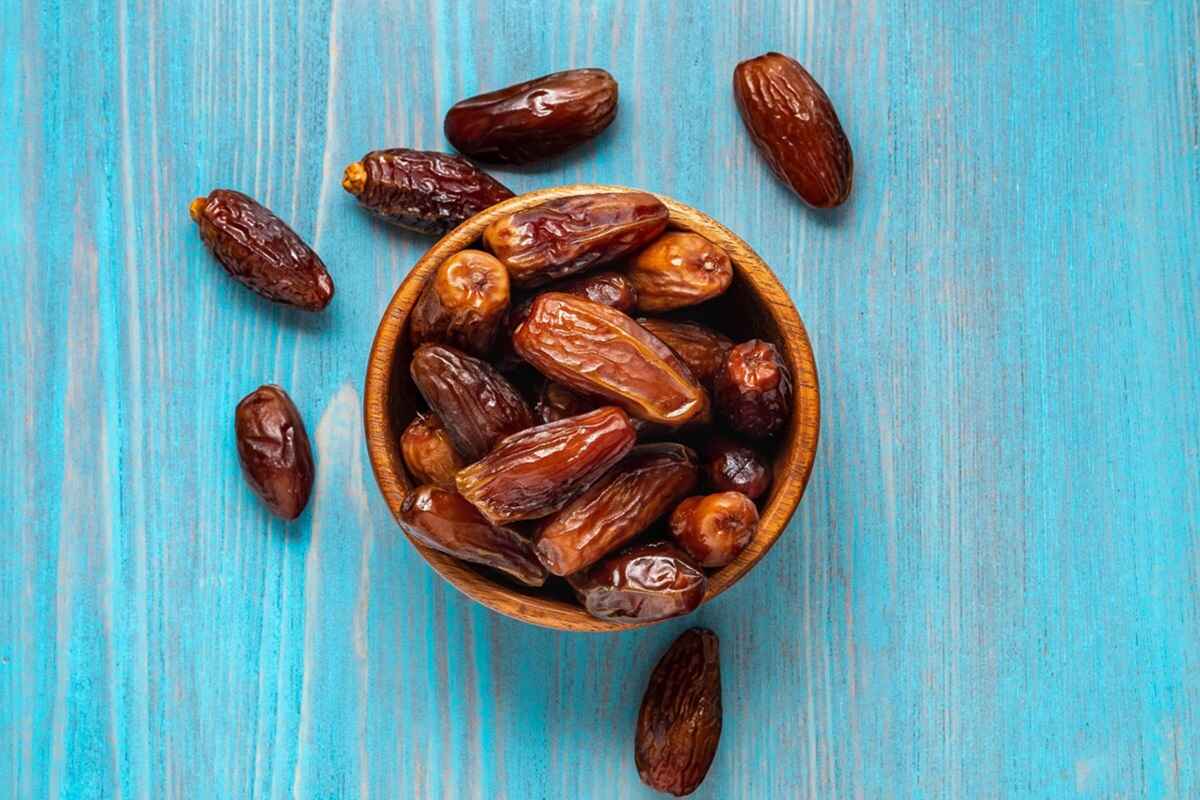
Medjool is a large dry, chewy date. It is cultivated in many regions globally, including the US, Jordan, Saudi Arabia, Palestine, and Iran. Because global production is high and geographically diverse, the supply chain is highly stable. Medjool contains more complex carbohydrates, creating a firmer structure.
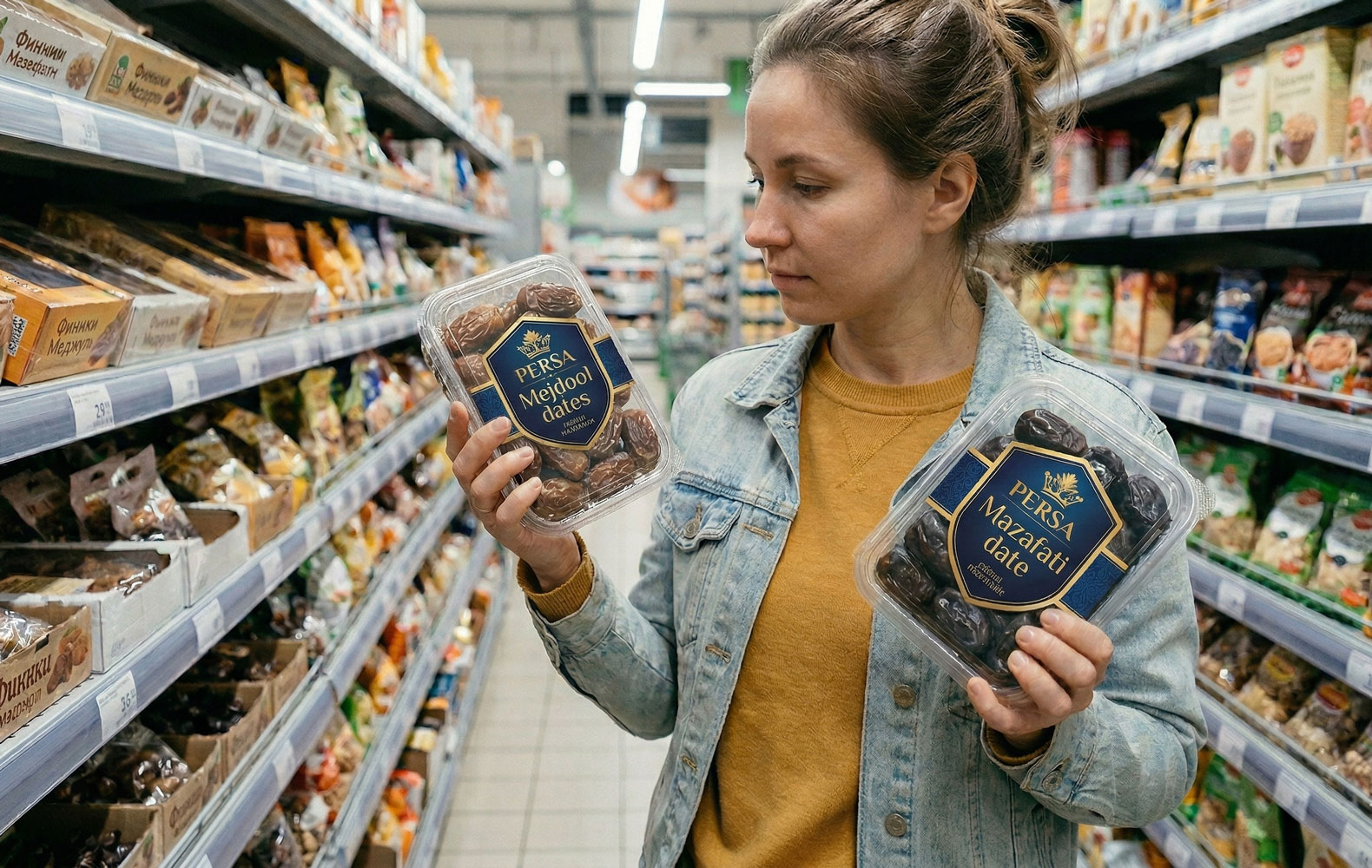
Mazafati is a fresh date. It is cultivated almost exclusively in a small region in southern Iran. Because the growing region is limited, the global quantity is lower. However, consumer demand for this ultra-soft, easy-to-eat variety is massive. When conducting an Arabian dates comparison, buyers must analyze the sugar composition. Mazafati provides an immediate glucose release due to its high moisture, whereas Medjool offers a slower breakdown.
Shelf Life Comparison: Mazafati vs Medjool Storage
To understand the financial impact of these two premium date varieties, you must look at their physical storage limits. The moisture content in dates dictates your operational costs.
| Feature | Mazafati (High Moisture) | Medjool (Low Moisture) |
|---|---|---|
| Moisture Content | 20% – 35% | 15% – 18% |
| Room Temperature Shelf Life | 7 – 15 days (fermentation risk after) | 1 – 3 months |
| Refrigerated (0°C to 5°C) | Up to 12 months | 6 – 12 months |
| Frozen (-5°C to -18°C) | Up to 24 months | 12 – 24 months |
| Logistics Requirement | Reefer (RF) container required (0°C to -2°C) | Dry container possible (depending on transit) |
| Hidden Operational Cost (OpEx) | +3% to +5% cold storage fees | Zero refrigeration fees (ambient storage allowed) |
| Best Inventory Strategy | Strict FIFO – cannot hold stagnant stock | Bulk-buy & hold ambiently for months |
Export Seasonality & Sourcing Strategy
Sourcing timing impacts your buying price.
- Mazafati Export Seasonality: The harvest occurs from August to October. Because the export window is concentrated, buyers must secure contracts early to guarantee Grade A supply before Ramadan spikes.
- Medjool Export Seasonality: The primary harvest occurs from September to November. However, because Medjool is grown in multiple regions, the global supply is more staggered.
Labour & Harvesting Methods
The physical harvest impacts the final product presentation. Mazafati harvesting relies on traditional, manual labor. Workers hand-pick the delicate Rotab dates to prevent bruising the ultra-soft skin. Conversely, Medjool harvesting often utilizes mechanized processes—especially in large-scale agricultural sectors—involving hydraulic lifts and automated sorting lines to handle the firmer fruit efficiently.
Hidden Costs of Mazafati vs Medjool for Wholesalers
Why Is Medjool Often More Expensive?
Medjool dates consistently command a higher FOB price. This premium is not strictly about superior quality. It stems from heavy global branding, organized marketing boards, and the logistical premium placed on its long-term ambient shelf life. You are paying for marketing overhead and storage flexibility.
Why Mazafati Can Be Cheaper (But Not Worse)
Mazafati offers a lower FOB price due to concentrated regional production and lower local labor costs in Iran. The shorter export window forces suppliers to turn over inventory quickly. However, importers must factor in the Hidden Costs: the cold storage fees required to keep Mazafati stable. Mazafati is cheaper to buy, but more expensive to hold.
Strategic Insight: Stock Rotation Strategies
Your inventory strategy must match the date variety. Mazafati requires strict First-In, First-Out (FIFO) inventory management. You cannot hold stagnant Mazafati stock. Medjool allows for a bulk-buying strategy; you can purchase large volumes during harvest dips and hold the stock ambiently for months without risk of fermentation.
Regional Market Velocity: Mazafati vs Medjool Sales Data
Regional preferences dictate retail velocity. Based on industry estimates and trade flow data, buyer behavior shifts dramatically depending on the destination market:
- South Asia (India, Pakistan, Bangladesh): Mazafati velocity is estimated to be 2x higher during Ramadan. Consumers in this region heavily prefer soft, fresh dates for breaking their fast (Iftar) due to the rapid energy release.
Real-World Impact: A Chennai-based importer switched from Medjool to PERSA’s Grade A Mazafati. Despite investing in a 20ft reefer container and cold storage, their net margin per kg increased by 12% because the retail price remained competitive and velocity doubled during Ramadan.
- GCC Countries (UAE, Saudi Arabia, Kuwait): Market segmentation is clear. Medjool dominates the premium corporate gifting sector. However, Mazafati dominates household daily consumption due to its price accessibility and ultra-soft texture.
- Europe & North America: Medjool currently holds an estimated 70% of the premium date shelf share in mainstream supermarkets. However, Mazafati’s import volume is growing at an estimated 18% YoY, driven by specialty stores, ethnic supermarkets, and health-conscious consumers seeking refined-sugar alternatives.
Retail Display Tips for Maximum Velocity
Retail execution dictates your final margin.
- Presenting Fresh Mazafati: You must display Mazafati in refrigerated end-caps or on produce cooling racks. Displaying them on a standard dry shelf destroys the product in under 15 days.
- Presenting Dried Medjool: Medjool thrives in bulk bins or standard dry aisles. This allows for aggressive cross-merchandising with nuts, dried fruits, and ambient grocery goods.
Frequently Asked Questions: Logistics & Sourcing
- Grade A: Ultra-soft, high moisture, requires a strict cold chain.
- Grade B: Slightly firmer, more tolerant to temperature variations.
- Risk Factor: Shipping Grade A without refrigeration exponentially increases the risk of fermentation and leakage.
Common alternatives for procurement managers include:
- Third-party inspection reports
- High-resolution batch photos and videos
- Trial shipments with mixed grades
- Small pallet shipments via standard air cargo (when available)
To minimize risk and improve capital turnover, start with:
- A dedicated Reefer shipment.
- A smaller container (20ft) or a shared reefer container (LCL) if available.
- Timing the import for the faster-selling season (such as the pre-Ramadan period).
Risk Mitigation & The Logical B2B Solution
High moisture brings logistical risk. If Mazafati dates experience temperature spikes during sea freight, they will sour. This leads to total cargo loss. At PERSA, we mitigate this risk through strict protocols: pre-cooling cargo to 2°C before loading and utilizing active reefer logistics under strict Incoterms.
Medjool dates are an excellent product for ambient retail displays and long-term storage. However, Mazafati dates completely dominate the luxury market for ultra-soft, immediate-consumption dates. Wholesale distributors who manage their cold chain effectively secure higher retail velocity and faster repeat purchases with Mazafati.
KIAN ZARRIN PERSA LTD supplies wholesale Grade A Mazafati dates to industrial buyers and chain stores worldwide. We handle the complex cold-chain logistics from our factory to your destination port.
Contact PERSA today to request a commercial sample shipment and receive an exact CIF pricing quote based on current harvest yields.